

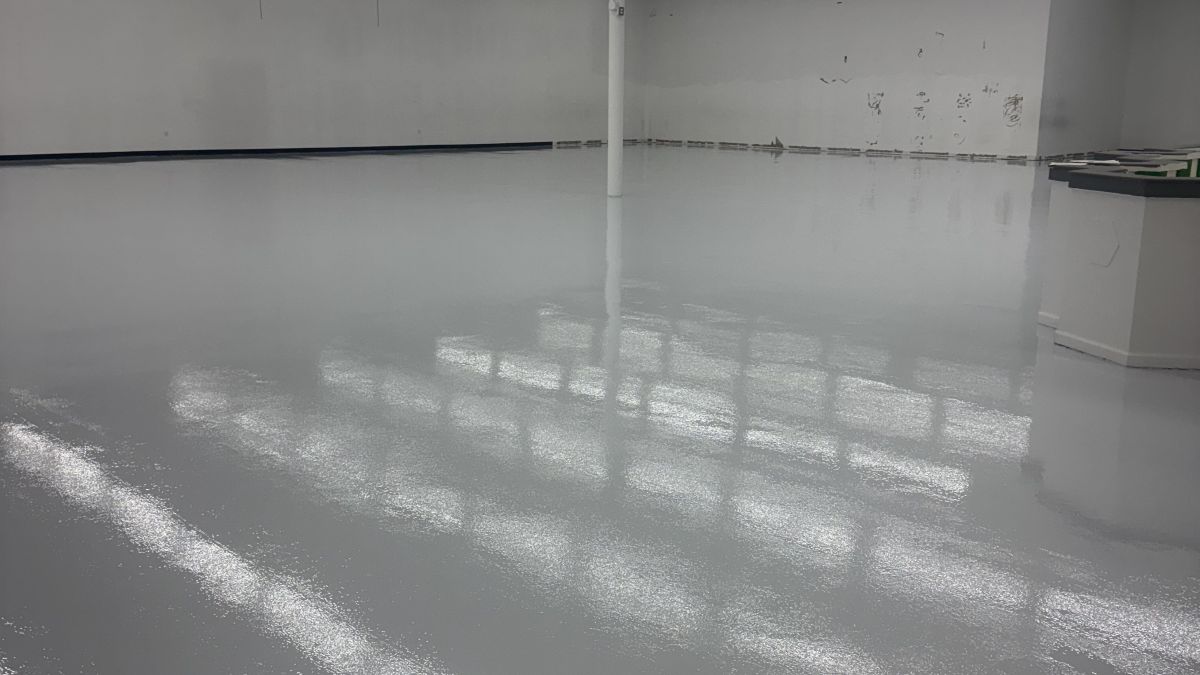
Walk into any busy commercial kitchen and pay attention to what’s happening at floor level. Grease drips from cooking surfaces. Water pools near sinks and dishwashing stations. Staff move fast across surfaces that are rarely completely dry. This is the everyday reality of food service, and it’s exactly why slip resistance isn’t just a nice feature in commercial kitchen flooring — it’s an absolute requirement for any responsible kitchen operator.
How Common Are Slip and Fall Accidents in Commercial Kitchens?
Slip and fall injuries are consistently among the most reported workplace accidents in the food service industry. A kitchen floor that becomes slick under grease and water puts every person working that shift at risk. Beyond the human cost, these accidents carry real financial consequences including workers’ compensation claims, lost productivity from injured staff, and potential liability exposure for the business.
The most effective way to prevent these accidents isn’t to put down rubber mats that shift underfoot and collect bacteria underneath. It’s to choose a floor system that builds slip resistance directly into the surface itself. That’s precisely what a professionally installed epoxy system with broadcast aggregate achieves in a way that no mat, coating, or tile treatment can replicate long term.
What Creates the Slip-Resistant Texture in Epoxy Flooring?
The slip resistance in HPS Flooring’s commercial kitchen epoxy system comes from broadcast aggregate incorporated during the slurry phase of the installation. This aggregate is spread across the wet slurry layer and becomes permanently embedded in the surface as it cures. The result is a textured finish that provides grip for kitchen footwear even when the floor is covered in water, cooking oil, or cleaning solution.
What makes this method superior to surface-applied anti-slip treatments is permanence. Treatments applied on top of a finished floor wear away with cleaning and foot traffic over time. The aggregate in an HPS epoxy system is part of the floor itself. It doesn’t peel, wear through, or require periodic reapplication. The slip resistance you have on day one is the same slip resistance your kitchen floor delivers five and ten years later.
Does Slip-Resistant Flooring Affect Cleaning Ease?
This is a fair question. Some operators worry that a textured surface will be harder to clean than a completely smooth one. In practice, the aggregate texture used in professional grade epoxy systems is fine enough to provide grip without creating deep grooves that trap food particles. The surface remains non-porous and seamless, so spills don’t penetrate it and cleaning solutions work across the entire surface efficiently.
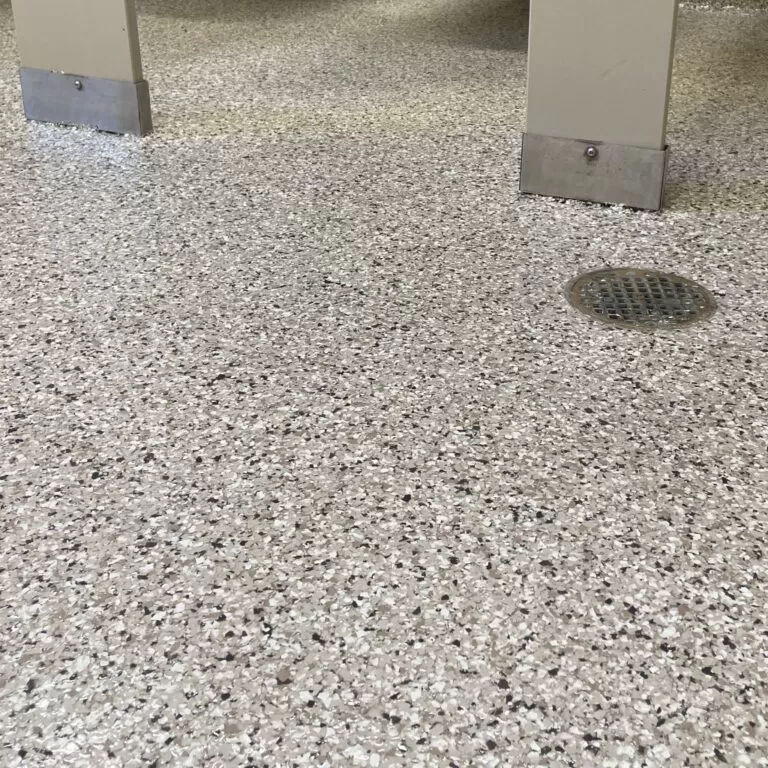
Regular sweeping followed by damp mopping is all the daily maintenance this floor requires. The resins used by HPS Flooring are specifically formulated to resist the harsh chemical sanitizers that food service facilities apply multiple times per day for health code compliance. The combination of slip resistance and easy cleaning isn’t a compromise. It’s one of the core strengths of a properly engineered epoxy system for commercial kitchens.
How Does HPS Flooring Achieve Such Strong Slip Resistance?
The process starts with thorough surface preparation using 800-pound diamond grinding equipment. The significant weight of that machine creates the downward pressure needed to achieve a consistent surface profile that gives the epoxy system its strong mechanical bond. HEPA vacuum systems remove every trace of dust and debris from the substrate before application begins. This level of preparation ensures the slurry and aggregate bond to the floor permanently rather than sitting on top of a contaminated surface.
For operators in New Jersey specifically researching commercial kitchen flooring NJ solutions with genuine long-term slip resistance, this preparation process is what separates HPS Flooring’s results from those of general contractors who apply epoxy products without understanding the substrate requirements. Slip resistance that lasts starts with surface preparation done correctly the first time.
What Role Does the Chemical Resin Topcoat Play?
After the slurry and aggregate layer has cured, HPS Flooring applies a chemical resin topcoat that seals and protects the entire surface. This topcoat provides the floor’s chemical resistance, its seamless and non-porous character, and its long-term durability against the daily abuse of a commercial kitchen environment. It doesn’t cover the slip-resistant texture because the aggregate is embedded in the layer below, not sitting on the surface waiting to be sealed over.
The topcoat is also what makes this floor resistant to the grease, oils, and thermal shocks that break down inferior flooring products over time. HPS Flooring has been applying these systems since 1988, which means over 37 years of refinement and experience with the specific chemistry and application techniques that produce lasting results in real commercial kitchen environments.
Conclusion
Slip resistance isn’t a feature you add to a commercial kitchen floor after the fact. It needs to be engineered into the system from the very beginning. Broadcast aggregate embedded in a urethane epoxy slurry creates a surface that grips footwear under wet, greasy conditions without becoming a cleaning challenge. Combined with a chemical resin topcoat and a seamlessly bonded surface, this system protects kitchen staff from accidents while making daily sanitation faster and easier than tile ever could. For New Jersey kitchen operators ready to give their team a safer floor, HPS Flooring’s free consultation is the right place to start.
FAQ
How long does the slip-resistant texture last in an epoxy kitchen floor? Because the aggregate is embedded in the slurry layer rather than applied as a surface treatment, the slip-resistant texture lasts for the full life of the flooring system without wearing away.
Does the textured surface make cleaning harder? No. The aggregate texture is fine enough to provide grip without creating deep grooves. The surface remains seamless and non-porous, making daily cleaning fast and easy.
What areas of NJ does HPS Flooring cover for commercial kitchen projects? HPS Flooring serves commercial kitchens throughout NJ including Montclair, Asbury Park, Morristown, Red Bank, and surrounding areas, plus parts of NY and PA.