

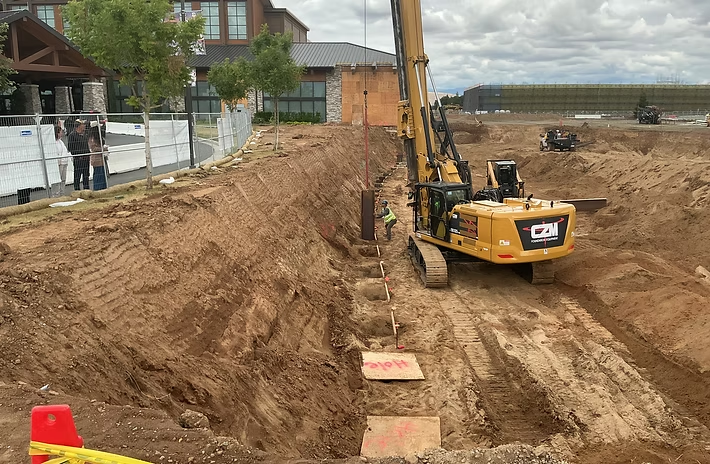
When a commercial general contractor needs excavation walls stabilized quickly and reliably, shotcrete often becomes the material of choice. It is concrete or mortar that is sprayed at high velocity onto a surface, allowing it to be placed and compacted almost simultaneously. That speed matters enormously on active job sites where time and safety are both on the line.
Seiscore is a specialty shoring and structural contractor that self-performs drilling, shoring, structural, and concrete work, including shotcrete, for commercial general contractors. Because the crew handles this work directly rather than subcontracting it out further, projects tend to move with fewer delays and less coordination friction between trades.

What Makes Shotcrete Different From Standard Concrete
Traditional concrete pouring requires forms and time to cure before it provides structural support. Shotcrete skips much of that waiting period. Since it is pneumatically projected onto vertical or even overhead surfaces, it can be applied directly to excavation walls, soldier pile systems, or existing structures without the same setup requirements.
- It bonds well to irregular or uneven surfaces
- It can be reinforced with steel rods, mesh, or fibers
- It offers high compressive strength and good durability
- It resists water intrusion once properly cured
These qualities are exactly why shotcrete has become such a common tool in shoring and earth retention work, especially on tight urban sites where space for traditional formwork is limited.
Shotcrete in Earth Retention Systems
One of the most common applications for shotcrete is filling the voids between soldier piles in an earth retention system. Soldier pile walls use vertical steel piles or beams spaced at regular intervals, and the material between them, often shotcrete, timber, or concrete panels, provides lateral support and helps retain the surrounding soil.
This combination is particularly useful for stabilizing excavations and preventing slope erosion, and it works across a wide range of soil conditions and depths. For contractors managing complex sites, being able to self-perform this scope end to end reduces the number of moving parts on an already complicated schedule.
Why Self-Performing Shotcrete Work Matters
There is a meaningful difference between a general contractor who subcontracts every piece of shoring work separately and one who partners with a specialty contractor capable of self-performing drilling, shoring, structural, and concrete scopes together. Seiscore serves as both a subcontractor and a design-build contractor on shoring scopes, which allows commercial GCs to consolidate multiple phases of work under a single point of accountability.
This matters because shoring and shotcrete work often happens early in a project timeline, before the rest of the structure can move forward. Delays at this stage tend to ripple through the entire schedule. Working with a contractor who understands both the engineering and the physical execution helps keep that early phase on track.
Safety Considerations With Shotcrete
Shotcrete work isn’t just about material application; it also plays a direct role in job site safety. During excavation, properly installed shoring systems speed up the process while protecting workers from the risk of trench or wall collapse. This is different from shielding, which only protects workers after a collapse has already occurred. Shoring, including shotcrete applications, is designed to prevent that collapse from happening in the first place.
For any commercial general contractor evaluating a shoring partner, licensing and insurance coverage are essential considerations. Seiscore holds California Contractor License number 1126002 and carries insurance coverage suited for commercial GC contracts, which gives project teams a clear framework for accountability throughout the scope of work.
Choosing the Right Shotcrete Approach
Not every project calls for the same shotcrete application method. Some sites benefit from wet mix processes, while others are better suited to dry mix approaches depending on access, surface conditions, and structural requirements. A specialty contractor with direct field experience can evaluate these variables and recommend an approach that fits both the engineering requirements and the practical constraints of the site.
This kind of judgment typically comes from years of hands-on work across different soil types and excavation conditions. It is not something that can be fully replicated through design specifications alone, which is part of why experienced self-performing crews add real value to a project.
Working With a Design Build Partner
Beyond straightforward subcontracting, there is real advantage in working with a shoring contractor that also operates in a design build capacity. This structure allows the contractor to weigh in earlier, potentially catching engineering or sequencing issues before they become costly problems during construction. For commercial GCs managing tight budgets and schedules, this kind of early involvement can prevent expensive rework later in the process.
Final Thoughts
Shotcrete remains one of the most practical and effective tools available for shoring and structural stabilization work, particularly on commercial projects where speed, strength, and adaptability all matter. Working with a specialty contractor that self-performs this scope, rather than passing it through multiple layers of subcontractors, tends to produce more consistent results and clearer accountability from start to finish.
For commercial general contractors evaluating their next shoring scope, understanding how shotcrete fits into the broader structural plan is an important first step toward a smoother, safer project.
FAQ
What is shotcrete used for in shoring projects?
Shotcrete is sprayed concrete used to stabilize excavation walls and fill voids in earth retention systems like soldier pile walls, providing immediate structural support.
How is shotcrete different from a standard concrete pour?
Shotcrete is pneumatically applied and compacts as it is placed, allowing it to be used on vertical or overhead surfaces without the same formwork requirements as poured concrete.
Why does licensing matter when hiring a shotcrete contractor?
An active California Contractor License, along with proper insurance coverage, confirms that a contractor meets state requirements and is equipped to handle commercial-scale work.